
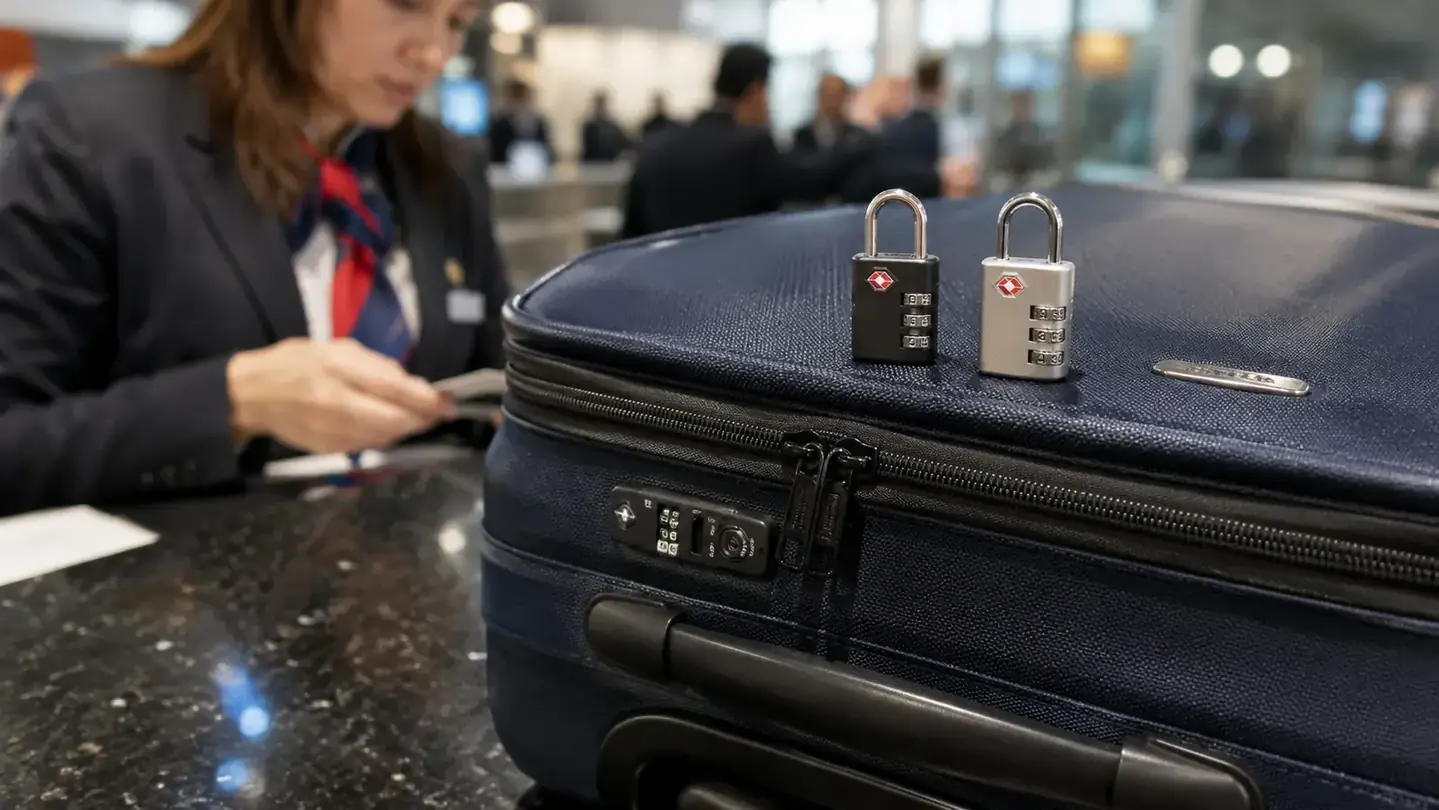
If you check bags with any regularity, at some point you have asked yourself whether a luggage lock is actually worth it. The honest answer is yes, with one important qualifier: the lock only helps if it is the right one. I have been checking luggage on domestic and international trips for over a decade, and in that time I have owned or borrowed pretty much every TSA-approved combination lock worth talking about. The two names that come up most often are Forge and Master Lock. They cost about the same, both carry TSA approval, and both use a 3-digit combination. Beyond that, they diverge in ways that genuinely matter at the baggage carousel.
The short answer: Forge is the better lock for most travelers, largely because of its open-alert indicator and easier-to-read dials. Master Lock is a reliable backup option if you already own one, but it lacks features that make your life noticeably easier when your bags are out of your hands for hours at a time.
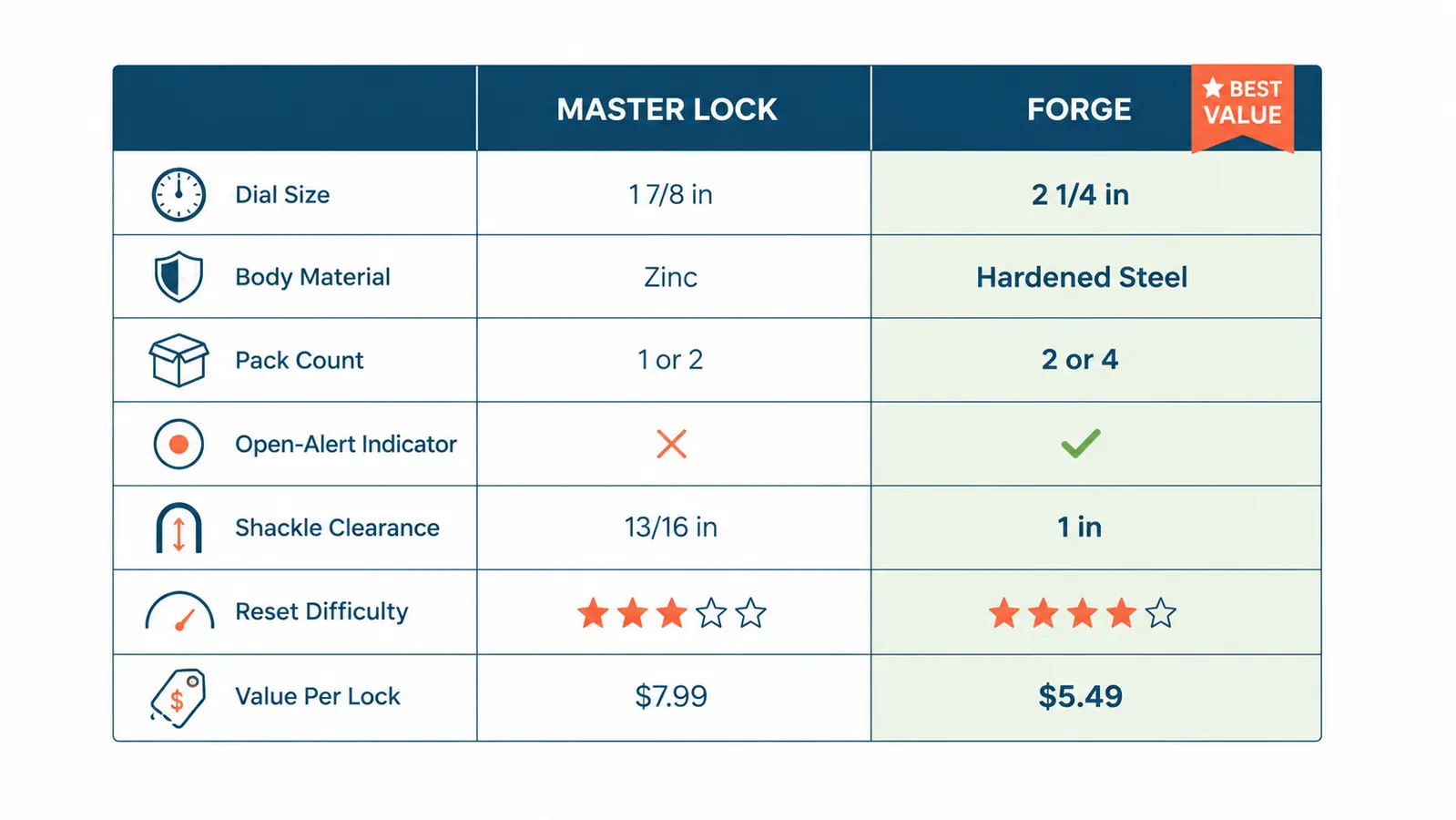
| Forge | Master Lock TSA Luggage Lock | |
|---|---|---|
| Body Material | Zinc alloy | Aluminum body / steel shackle |
| Dial Size | Large, easy-read digits | Standard size, harder to read in low light |
| Pack Count (typical listing) | 4 locks per pack | 2 locks per pack (most common) |
| Open-Alert Indicator | Yes, color-coded window shows if TSA opened bag | No indicator feature |
| Shackle Clearance | Standard clearance, fits most zipper pulls | Standard clearance, similar fit range |
| Combination Reset Process | Straightforward with included instructions | Multi-step process; some users find it confusing |
| Value Per Lock | Lower cost per lock in 4-pack | Higher cost per lock in 2-pack |
| TSA Approved | Yes, Travel Sentry certified | Yes, Travel Sentry certified |
Where Forge Wins
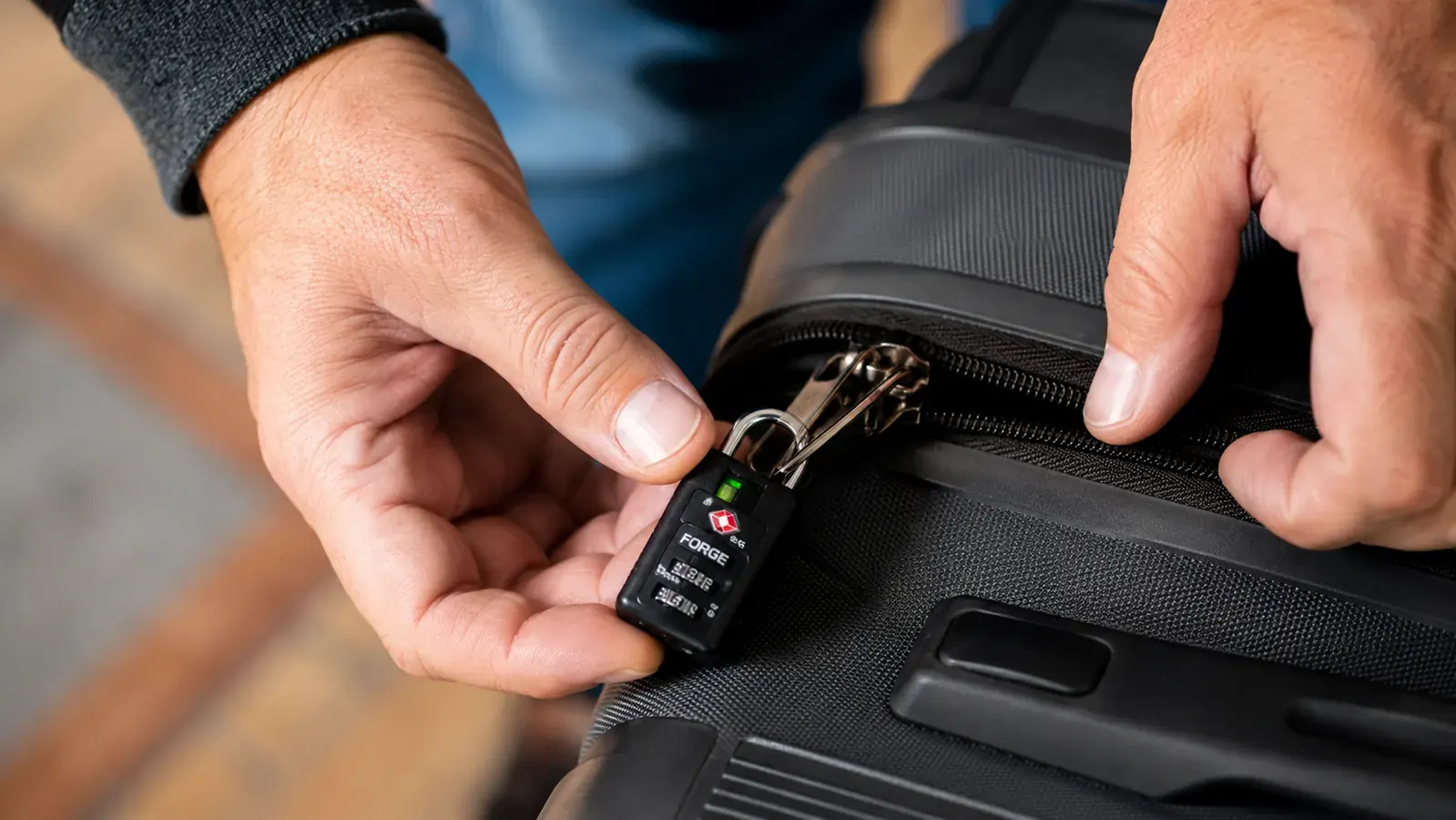
The open-alert indicator is what separates the Forge from the rest of the category. It sounds like a small detail until you have stood at a baggage carousel genuinely unsure whether TSA rummaged through your bag or whether that scarf you packed in the outside pocket just shifted. The Forge uses a small color-coded window built into the lock body. When TSA uses their master key to open your bag, the indicator trips. You can glance at the lock and know immediately that your bag was searched. That information is useful, not because you can do much about it mid-trip, but because you can do a quick inventory before you leave the airport instead of discovering something missing at the hotel.
The dials are the other thing I appreciate. Forge uses noticeably larger numbers than most competitor locks, which sounds trivial until you are at 6am in a dim airport terminal trying to spin the combination with one hand while the other is holding your boarding pass. The zinc alloy body feels substantial without being heavy. I have dropped these on tile floors, shoved them through backpack straps, and dragged them across overhead bins, and they have not shown meaningful wear. The 4-lock pack is also a real practical advantage: a family with two checked bags needs four locks to do it right (one per zipper), and the Forge pack covers that with a single purchase.
Four locks, one pack, one low price. The Forge is what I put on every bag I check.
Rated 4.6 stars from 13,000+ travelers. TSA-approved, open-alert indicator, zinc alloy body. Works on suitcases, duffel bags, and backpacks.
Amazon Check Today's Price on Amazon →Where Master Lock Wins
Master Lock has brand recognition that spans generations. If you learned to use a combination lock as a kid, you probably used a Master Lock, and that familiarity is not nothing. The build quality is solid, the shackle is steel, and the aluminum body is light without feeling cheap. For anyone who already owns a Master Lock TSA and is debating whether to switch, the honest answer is: your existing locks are fine. Master Lock will not fail you. If your bag comes back closed and nothing is missing, you will never notice the absence of an open-alert indicator.
Where Master Lock genuinely holds its own is shackle strength. The steel shackle on most Master Lock TSA models is a touch harder to cut than a zinc shackle, which matters if you are leaving bags in environments beyond the standard airport system, such as overnight buses, hostel storage rooms, or train luggage racks. In those contexts, a bolt cutter resistant shackle is worth more than an open-alert window. For pure deterrence in uncontrolled environments, the Master Lock shackle is worth knowing about.
The Combination Reset: A Detail That Drives People Nuts
I want to spend a moment on combination resets because this is where a lot of traveler frustration originates. The default combination on new Forge locks is 0-0-0. Resetting it takes about two minutes with the printed instructions, and the process is intuitive enough that most people get it right on the first try. I have reset mine three times over two years when I suspected someone else had seen me enter the code, and I have never needed to look up a YouTube video to do it.
Master Lock's reset process is more finicky. The steps are not difficult in isolation, but they require holding the shackle in a specific position while rotating to a specific number, and several reviews mention people accidentally locking themselves out during the reset. This is not a dealbreaker, but if you travel with family members who are not gear-focused, handing them a Forge and telling them to set their own code is a smoother experience than walking someone through the Master Lock process over the phone from a different terminal.
The open-alert indicator has tripped on four of my checked bags over two years. Three were routine TSA inspections. One led me to file a missing-item report at the airport rather than discovering it hours later at the hotel.
Value Per Lock: The Pack Math Matters
When you look at the price for the Forge 4-pack versus a Master Lock 2-pack, the Forge tends to come out meaningfully cheaper on a per-lock basis. If you travel with a partner, two checked bags, or any combination of suitcases and duffels, you are going to want at least four locks on hand. Buying two separate 2-packs of any lock typically costs more than buying a single 4-pack. This is not a huge financial argument, but it is a practical one: the Forge 4-pack is a complete solution for most families in a single purchase, and you end up with spares when one inevitably gets left on a bag in the closet.
There is also a practical note on sizing. Both locks fit standard suitcase zipper pulls without any modification. If you travel with older hard-sided luggage or bags that have unusually thick zipper pulls, check the shackle gap measurement before buying either brand. I have only encountered one bag in years of travel where a standard TSA lock shackle was too narrow, and that was a vintage hard-sided Samsonite from the 1980s.
Real Travel Use: What You Actually Notice
I started keeping a loose log of my checked bags after I found a TSA inspection notice in my bag without realizing the bag had been opened until I got back to my hotel. Nothing was missing, but it made me want a faster way to know at the baggage carousel rather than at the hotel three hours later. I started using the Forge specifically for the open-alert feature, and in roughly 40 trips of checked bags since then, the indicator has tripped four times. Three were routine secondary screenings with the standard TSA notice inside the bag. The fourth time there was no notice, and I noticed a small item was missing from an outside pocket. I filed a report at the airport that day rather than two days later, which at minimum gave the report more credibility.
The Master Lock I used for the preceding three years gave me nothing to go on in those situations. It sat on the bag and told me nothing either way. That is not a flaw, exactly. It is just the baseline expectation for most luggage locks. The Forge raises that baseline in a way that matters to anyone who checks bags regularly.

Who Should Buy the Forge
The Forge is the right pick for frequent flyers who check bags on most trips, travelers going to destinations known for airport theft or high inspection rates, families who need multiple locks and want a single purchase, and anyone who has ever stood at a baggage carousel wondering whether their bag was opened in transit. The open-alert feature is not a security upgrade in the sense of preventing theft. It is an information upgrade that lets you act at the airport instead of the hotel. That time difference matters more than it sounds.
It is also just a well-made lock. The zinc alloy body is heavier than plastic but lighter than full steel, landing in the right spot for something you clip onto a bag and mostly forget about. The 4.6-star rating across more than 13,000 reviews reflects genuine satisfaction, not a flood of first-week impressions. A lock with that many reviews and a rating that high is doing something consistently right.
Who Should Skip the Forge (and Stick with Master Lock or Another Option)
If you travel carry-on only, every single trip, you do not need a luggage lock at all, and neither the Forge nor Master Lock is worth buying. If you are a backpacker who needs a lock primarily for hostel lockers or unattended storage rather than airport checked luggage, a keyed padlock or a heavier-duty combination lock with a thick steel shackle will serve you better than either TSA-specific option. TSA approval is irrelevant if your bags never go through a checked luggage system.
If you already own a set of Master Locks that are in good condition, there is no urgent reason to replace them before your next trip. Buy the Forge when your current locks wear out or when you need to add to your collection. The open-alert indicator is a genuine upgrade, but it is not so significant that you should throw away functional gear to get it.
If you check bags more than twice a year, the Forge open-alert is the one upgrade worth making.
The Forge 4-pack gives you TSA-approved protection on every bag you check, with clear dials and the open-alert indicator that lets you know at the carousel if TSA opened your bag.
Amazon Check Today's Price on Amazon →